Silicon Valley always wants more—more wealth, more power, and more control. But what happens when tech giants evolve from corporate titans into feudal lords, and users become their unwitting serfs? How did Donald Trump’s presidency fuel this transformation, and what does it mean for the future of capitalism, wealth, and power? This article explores the rise of techno-feudalism, the alliance between Trump and Silicon Valley, and how their partnership is reshaping the world.
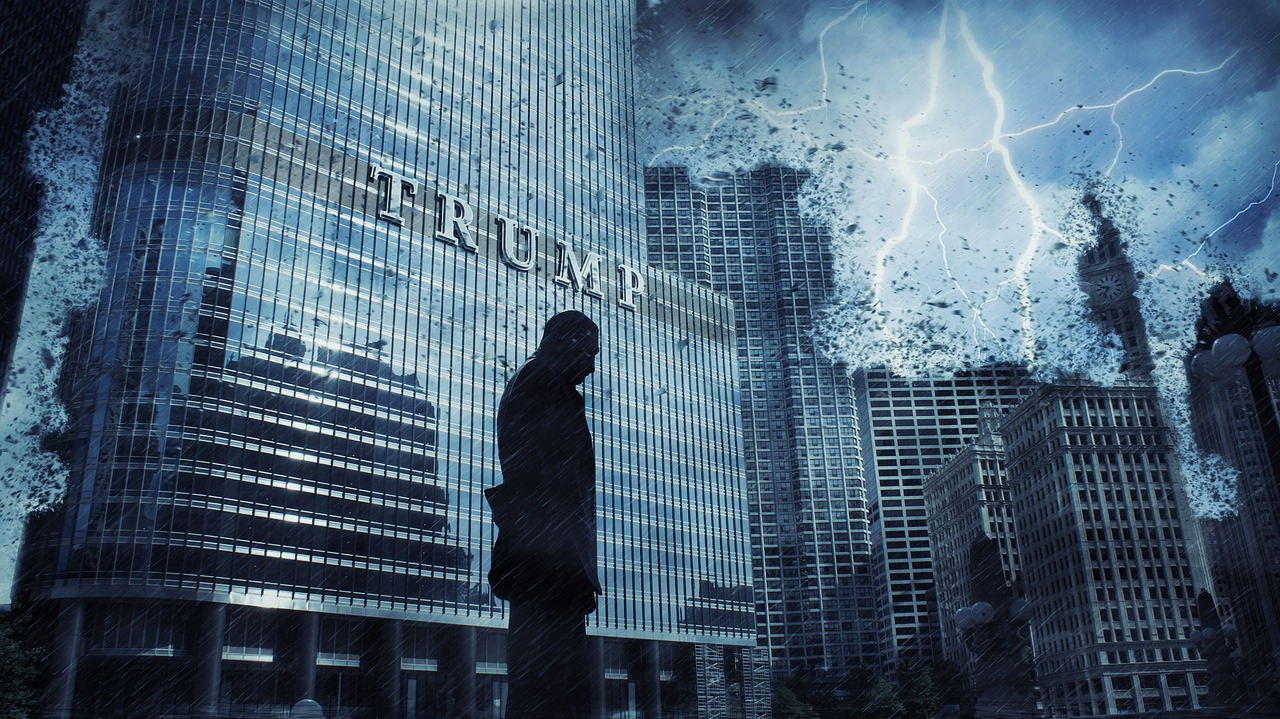

Yanis Varoufakis’s concept of techno-feudalism has gained significant momentum, especially after Trump’s election victory. The term has frequently come up in discussions about the changing nature of capitalism and power. Why?
Traditional capitalism, defined by open markets and competition, seems to be disappearing, giving way to a new order: techno-feudalism. While tech moguls consolidate their power, we are witnessing an economic model in which users act as unpaid workers, creating enormous wealth for platform owners. So what role does Trump play in this transformation?
The Reciprocity Between Trump and Big Tech
15 January 2025, in his last speech, Joe Biden described his country as an oligarchy. This means that power is concentrated in the hands of a group of ultra-rich people. While Trump positions himself as a populist leader challenging the status quo, the wealth of those in his cabinet is around 7 billion. If we also take into account the wealth of Elon Musk, whom Trump included in his election campaigns, we can see the love story of wealth and power.
The Trump administration played a significant role in ensuring the rise of the Silicon Valley oligarchs, and it will likely continue to do so. These figures are no longer just entrepreneurs; they are turning into political actors who shape national policies (Varoufakis, 2023). For example, the creation of the Office of Government Efficiency, led by Musk and Vivek Ramaswamy, exemplified the deep integration of corporate and state power. This office, which oversaw the privatization of key government functions, allowed tech leaders to directly influence public policy.
Trump’s economic policies have facilitated a shift in which tech giants have moved beyond profit-making to becoming direct participants in governance. Through their platforms, they influence public discourse and shape ideological narratives. Musk’s open support for Trump during the election, the loosening of content moderation policies, and the apparent alignment of big tech with the Trump administration highlight this mutually beneficial relationship. Trump, who was widely criticized in 2016, is now seen by these tech oligarchs as a source of tax relief, the lifting of AI restrictions, and cash flowing into their pockets.
The Death of Capitalism?
In its classical form, capitalism is built on competition and open markets. However, Silicon Valley’s monopolistic tendencies run counter to this framework. Companies like Amazon, Google, Meta, and X (formerly Twitter) have not only monopolized their own industries, but have also seized control of the basic infrastructure of communication, commerce, and information dissemination.
Varoufakis describes this shift as the replacement of capitalist markets with digital platforms, where wealth accumulation occurs through digital rents rather than traditional profits. He writes, "Instead of landowners exercising control over peasants, today’s tech lords dominate data, algorithms, and digital spaces, extracting value from users who are reduced to unpaid laborers" (Varoufakis, 2023). This system goes beyond mere manipulation; it dictates behavior: You should read this book, you should vote for this person, you should get this many likes, you should order this from Amazon.
Accelerationist Strategy
A key aspect of this transformation is the adoption of accelerationism; that is, the idea that existing structures of capitalism must be intensified to create a new socioeconomic reality. Figures like Musk and Thiel advocate radical technological expansion and deregulation, viewing traditional governance structures as obstacles to innovation (Tvorun-Dunn, 2022). Trump’s administration aligns with this philosophy with its emphasis on deregulation and state restructuring and is driving a shift in power from public institutions to tech oligarchs.
Varoufakis emphasizes that this shift is not just economic but also political. The weakening of traditional capitalist mechanisms in favor of digital monopolies points to a deeper transformation of governance, with power being centralized around corporate-controlled platforms rather than elected governments (Varoufakis, 2023). This transformation shows us that for a long time, oligarchs have not been loyal to the United States at all. Their loyalty is inversely proportional to their tax burden.
A New Political Order
In conclusion, Trump’s Republican Party is no longer strictly neoliberal or neoconservative; instead, it is on its way to becoming digital-age authoritarians. Varoufakis argues that the future of politics will be determined not by traditional left-right divisions but by the struggle between those who advocate the democratization of technology and those who seek to dominate it (Varoufakis, 2023). As Trump and Silicon Valley powerbrokers ally, the United States is rapidly shifting toward a reality in which digital aristocrats set the parameters of economic and political life, signaling the decline of capitalism and the emergence of a new techno-feudal order.
BIBLIOGRAPHY
- Tvorun-Dunn, M. (2022). Acid liberalism: Silicon Valley's enlightened technocrats, and the legalization of psychedelics. International Journal of Drug Policy, 110, 103890.
https://www.sciencedirect.com - Varoufakis, Y. (2024). Technofeudalism: What killed capitalism. Melville House.