Who Cares in the Climate Crisis? Gender, Rights, and Resilience

Who Cares in the Climate Crisis? Gender, Rights, and Resilience

When floods destroy infrastructure or heatwaves strain health systems, who absorbs the hidden costs? Why do women, already carrying most unpaid care work, become the de-facto first responders at the expense of their rights, health, and livelihoods? And what if care itself were recognised as climate infrastructure, as vital as roads or energy grids? This article examines how climate change magnifies care demands and deepens gender inequality, while also pointing to solutions from Pakistan’s floods to Bangladesh’s cyclone shelters that show how centering care can turn vulnerability into resilience.


In what ways can motherhood be more fully integrated into feminist discussions without reinforcing traditional gender roles?

Motherhood and feminism

Let’s delve into the complex relationship between feminist thought and the experience of motherhood, past and present, and reveal how care work and motherhood are often left out of the conversation. This article challenges both the romanticization and denial of motherhood, calling instead for a feminism that values ​​care, supports mothers, and confronts systemic inequalities. Through an intersectional lens, it asks us to rethink what freedom means when caregiving is at the center. Can a feminist future truly be inclusive if it leaves mothers behind?

The Rise of Techno-Feudalism: Trump and Silicon Valley’s Symbiotic Power Play

Trump and Techno-Feudalism

Silicon Valley always wants more—more wealth, more power, and more control. But what happens when tech giants evolve from corporate titans into feudal lords, and users become their unwitting serfs? How did Donald Trump’s presidency fuel this transformation, and what does it mean for the future of capitalism, wealth, and power? This article explores the rise of techno-feudalism, the alliance between Trump and Silicon Valley, and how their partnership is reshaping the world.

Women, Religion, and Control: A Reflection on Fatmagül Berktay's Work

DALL·E 2025-01-21 21.31.58 - A realistic painting of a single woman in a modest and natural setting, symbolizing women’s rights.

Throughout history, monotheistic religions have played a pivotal role in shaping societal norms—but at what cost to gender equality? Fatmagül Berktay’s Tek Tanrılı Dinler Karşısında Kadın offers a compelling critique of how these belief systems have reinforced patriarchal structures. This article delves into Berktay’s analysis, examining themes like the control of women’s bodies, societal expectations, and the intricate relationship between religion, power, and gender inequality.

Abortion: Exploring the Complexity of Life, Freedom, and Personal Choice in Response to Margaret Olivia Little's 'The Moral Permissibility of Abortion'

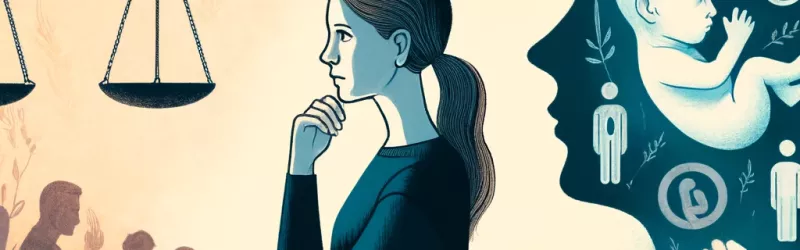
An AI-generated illustration capturing the emotional complexity and societal pressures surrounding personal choice and freedom in the context of abortion.

Why do we still see some countries racing to restrict abortion or impose near-total bans? This article explores the multifaceted issue of abortion, addressing its moral, social, and philosophical dimensions. It challenges the persistent perception of abortion as equivalent to murder, shedding light on the physical, emotional, and societal burdens that pregnancy places exclusively on women. Through philosophical arguments, the article underscores the fetus's dependency on the woman, arguing that abortion is a deeply personal decision that must remain free from state or societal interference.

A Critical Response to Aristotle Kallis' The Radical Right in Contemporary Europe

The Radical Right in Contemporary Europe

In recent years, socio-economic insecurities and structural challenges have paved the way for the rise of radical right movements across Europe. This article draws on insights from Kallis' The Radical Right in Contemporary Europe, exploring how integration issues, economic disparities, and the legitimization of radical right rhetoric have shaped this trend. It also reflects on the long-term consequences of the radical right's growing influence on European democratic values and social cohesion.

Does Multiculturalism Undermine Gender Equality? Sarah Song’s Argument Through the Lens of Cultural Relativism

Does Multiculturalism Undermine Gender Equality? Sarah Song’s Argument Through the Lens of Cultural Relativism

How do we balance cultural diversity with gender equality in liberal democracies? This article explores Sarah Song’s analysis of the tension between multiculturalism and gender equality, showing how multicultural policies that protect cultural rights can sometimes unintentionally uphold gender inequality within minority groups. Song argues for a more context-sensitive approach but warns against tolerating harmful traditions simply because they are seen as part of a cultural identity.